Sea Legs to Shoe Money: How Cruise Ship Croupiers Are Quietly Becoming Canada's Most Wanted Dealers
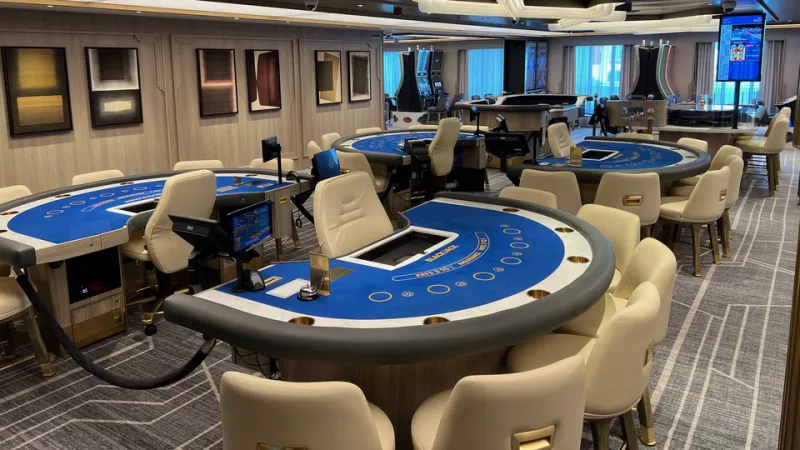
Photo: RL0919, CC BY-SA 4.0, via Wikimedia Commons
There's a corner of the UK gaming workforce that rarely gets mentioned in careers advice: the thousands of British croupiers who learned their trade at sea. Deal a few contracts on cruise ships — P&O, Cunard, Royal Caribbean, MSC — and you come back with a skill set that's oddly perfect for the Canadian casino industry. The trouble is, most cruise-trained dealers have no idea how to translate that experience onto dry land in Canada.
Let's fix that.
Why Recruiters Rate Sea-Trained Dealers
Ask Canadian casino hiring managers what they actually look for, and the answers are refreshingly unglamorous: reliability, chip accuracy, game breadth and the ability to survive a shift without sulking. Cruise work filters for all four.
Think about what a typical contract demands. You're dealing to a transient crowd who'll never see you again, in anything from a sleepy sea day to a raucous midnight session. You're living on the ship, which means there's no calling in sick because you couldn't be bothered to brave the weather. And you're almost certainly dealing multiple games — roulette, blackjack, maybe craps or a novelty side bet — because small casino ops can't afford specialists.
A recruiter we spoke to at a large Alberta casino group put it bluntly: "A dealer who's done six months on a cruise ship has already proven they can handle the two things that break new hires — isolation and repetitive shifts. Land-based casinos spend a fortune training people who quit after a month. Cruise veterans don't."
There's also a softer skill at play. Sea-day crowds are international, often rowdy, occasionally drunk and frequently confused about the rules. That's not so different from a Saturday night in a downtown Edmonton or Winnipeg casino. If you can keep a table friendly while enforcing procedure at 2am on the Norwegian Sea, a Canadian pit will hold no terrors.
The Licensing Question: Does Sea Time Count?
Here's the practical bit. Canadian casino dealers need provincial registration — think AGLC in Alberta, AGCO in Ontario, or the Liquor, Gaming and Licensing branches elsewhere. The good news for cruise-trained UK staff is that your sea experience strengthens rather than complicates the process.
Registration in Canada is largely about background checks, identity verification and demonstrating you're suitable to work in a regulated environment. Verifiable employment history is gold here, and cruise contracts come with the kind of documentation — contracts, employment letters, references from casino directors — that makes a UK application file look reassuringly complete. If anything, having dealt on a registered vessel shows regulators you've already operated under a gaming compliance regime.
What sea time does not do is skip steps. You'll still need the right to work in Canada — usually through a work permit tied to a job offer, or existing eligibility through family or previous status. The visa pathway is the same for everyone; your CV just makes the employer's case for hiring you stronger. We've covered the full paperwork roadmap elsewhere on the site, so treat this as the employment-history layer on top.
Money Matters: What the Pay Actually Looks Like
Cruise wages are notoriously structure-heavy — a modest base topped up by tips, room and board included. Canadian land-based casinos flip that model: hourly rates, often unionised in provinces like Ontario and BC, with tips pooled or shared depending on the house.
For UK dealers used to cruise base rates, the headline numbers can look underwhelming at first glance. But factor in the missing pieces — housing isn't deducted from your wage, shifts come with overtime and statutory holiday pay, and many Canadian casinos offer benefits packages that a ship contract simply can't match: pension contributions, health coverage, dental. Over a year, a stable land-based role often outperforms a rolling series of cruise contracts, and you get to keep your socks in a drawer rather than a locker.
The other shift, if you'll pardon the pun, is predictability. Cruise schedules are brutal and irregular; Canadian casinos run set rotations. If the sea life has worn you down, that alone is worth money.
A Step-by-Step Landing Plan
If you're currently at sea or fresh off a contract, here's the sequence that works:
- Document everything before you disembark. Get employment letters, game certifications and references while you still have access to the casino office. Once the ship sails, paperwork gets slow.
- Pick your province. Alberta and Saskatchewan have historically been welcoming to UK-trained dealers; Ontario offers volume but more competition. Match your game strengths — craps experience, for instance, is genuinely scarce and prized.
- Get your paperwork rolling. Secure a job offer first, then pursue the work permit. Reputable recruiters can sponsor and guide this; be wary of anyone who wants fees from you rather than the employer.
- Apply for provincial registration as soon as you have an offer. Processing times vary, and starting early keeps your start date realistic.
- Budget for the gap. Between last ship, first Canadian paycheque, you'll want a cushion — three months' expenses is a sensible target.
The Bottom Line
Cruise casino work is sometimes dismissed as a detour. From a Canadian recruiter's chair, it looks more like a proving ground. You've already done the hard part — surviving the shifts, handling the crowds, staying sharp through months of repetition. All that's left is pointing those skills at a country that's actively short of trained dealers.
Pack your references, mind the permit timeline, and consider this your boarding call for dry land.